Last updated on July 30, 2026
The question sounds like it ought to have an obvious answer. You say, “Hey Stiegemeyer, of course there is such a thing as Christian ethics. Christians have moral convictions. They argue about bioethics, war, sexuality, economic justice. They write ethics books with the word “Christian” in the title. What’s the problem?”
The answer to the question depends on what you expect the study of ethics to do for you. Let’s back up. Ethics is often treated as a sub-discipline of philosophy. Philosophy pursues questions about right action, the very nature of goodness, virtue, and human flourishing. It investigates theoretical frameworks for the good life.[1] Questions of right conduct can often be settled with reason, and you don’t need to be a Christian to do it. Indeed, Socrates and Cicero got quite far without Moses or Jesus or St. Paul. And that’s why sometimes Lutherans exhibit hesitation about the phrase “Christian ethics,” like we have a code that no one else shares.
What We Can’t Not Know
Confessional Lutheran theology holds that an elementary moral understanding is accessible to everyone through natural law and sound reasoning. Natural law and reason still find their origin in God, of course, but the resources of reason are available whether you are a theist or not. A pagan can know that murder is wrong. A Muslim can know that father and mother should be honored. An atheist can know that dishonesty destroys community. They can know these things not because they have read the Bible, but because God engraved His divine law on every human heart (Romans 2:14-15).[2]
The concept of natural law remains contested within Protestant theology. Some Reformed theologians have been more cautious about its reliability because of original sin, while Lutheranism has generally affirmed our ability to know moral truth without going light on the effects of the fall. St. Paul claims that the heathen are without excuse when they are judged for going against the law of God because, he say, they are able to know it even without the Bible.
In the Lutheran Two Kingdoms framework, God governs civil life, what is called the Kingdom of the Left, through reason and natural law. The Kingdom of the Right Hand is centered on the gospel which cannot be known apart from special revelation. But that is not necessary in order to establish social order, manage public safety, and build public works. Being a Bible-believing Christian, after all, does not necessarily make you a competent ruler of a just society and being a hypocrite or unbeliever does not automatically mean you can’t run a city or adjudicate fairly.
The Missing Link
If reason can do so much, then what exactly does Christianity contribute to the discipline of ethics, broadly considered? The distinctively Christian thing is not a different unique ethical code. Christianity contributes not a new set of moral rules but the revelation of Jesus Christ, through whom we learn what humanity, freedom, love, and the good life truly are. Ideas of human flourishing are limited without Christology to drive them.
The French impressionist artist, Paul Gauguin, painted a work he called, “Where do we come from? What are we? Where are we going?” Those are central questions that need to be answered before human life can be fully understood. Ultimately, this requires the inspired writings of God’s prophets and apostles, the Bible. Reason alone, as useful as it is, can only get us partway there.
Humanity’s natural rational ability can discern much about what ought and ought not be done because, as noted above, God’s law is written on the human heart. Yet fallen humanity does not perceive that law clearly. It’s like the radio is on but there is too much static to catch the whole song. Original sin clouds judgment, bends desire, and inclines us to suppress truths we would rather not acknowledge. Realize that if Adam and Eve could be deceived before the Fall, while they were still perfect, how much more vulnerable are we? We therefore need Scripture to clarify, correct, and reaffirm what we could know, should know, but often refuse to hear.[3] Yet Christian ethics is more than simply identifying imperative statements in the Bible.
I will seek in vain, for instance, to locate explicit Biblical teaching on in vitro fertilization or reproductive cloning. The same could be said for nuclear proliferation and dumping industrial toxins which kill all the frogs. But that does not mean God’s Word has nothing to say about those things. It takes the wisdom of the Church, through the Holy Spirit, to draw moral truth from what is clearly said in Scripture, our ultimate authority, and apply it to contemporary issues. So Moses, for example, did not directly write about IVF, but he and other inspired authors did write about creation, respect for others, and marriage and family. This is why we must not leave the teaching of ethics to philosophers. Ethical questions are never merely about actions. They are also about the nature and purpose of the human person. It is not that philosophy says nothing about human nature, virtue, and purpose. It’s that Biblical revelation gives us the clearest explanation of who we are, why we exist, and what our lives are for.
God Is Not Merely Making Better Rule-Followers
Christology does not only answer Gauguin’s questions in the abstract. It also reorients the moral agent from the inside out. Most ethical systems ask how we should regulate our behavior, weigh our obligations, and make better choices. Christianity cares about those things too but finds greater power in the category of personal transformation, the doctrine of sanctification. The Christian is not merely someone who has adopted a better ethical system but someone being changed by the Spirit of God within them. The good life is not simply about making the right moral moves, though that matters. It is about becoming a certain kind of person, or rather, being made into one. The virtue tradition in philosophical ethics recognized the importance of character, which is why Lutheran theology can engage Aristotle without collapsing into him. But where Aristotle’s virtuous person is self-cultivated, Christian holiness is received through the means of grace.
This is why Christian ethics cannot finally be separated from Christian theology. One can discern the precepts of right behavior without God. What is lost is the understanding of what is actually happening inside the person. For the Christian, moral growth is the Spirit’s work, the gradual conformity of a redeemed sinner to the image of Christ. That is not a philosophical claim. It is a theological one. And this is relevant when asking how we should or should not treat other people.
Nothing Left to Prove
Martin Luther is masterful on this point in The Freedom of a Christian. I always assigned it to my ethics students, not because it is an ethics textbook, but because it reframes the question of why we do anything good at all. Luther’s argument turns on a paradox: “A Christian is a perfectly free lord of all, subject to none. A Christian is a perfectly dutiful servant of all, subject to all.” These statements are not contradictory. They describe the two dimensions of the Christian life. The inner person is justified by faith and therefore free from the law’s condemnation. The outer person is thereby free to serve the neighbor in love. That inner freedom is foundational. Because the Christian is already justified on account of Christ, there is nothing left to earn. The verdict has already been rendered. Good works are no longer attempts to secure God’s favor, prove one’s worth, or quiet an anxious conscience. They become acts of love directed toward the neighbor.
This is the move that philosophical ethics cannot fully make. Kant can speak of duty. Aristotle can speak of virtue. Bentham and Mills focus on outcomes. They all offer valuable insights, at times. But they cannot explain how the self is liberated from the endless project of self-justification and what that has to do with good living. As a theologian, Luther can open that door, because the gospel has already addressed that problem. Justification frees the Christian from the need to establish his worth through moral performance, and sanctification is the Spirit’s resultant work of conforming him to Christ. Love of neighbor flows from reconciliation with God rather than serving as a means to achieve it. The moral life flows from justification rather than toward it.

Forget the Trolley Problem for a Minute[4]
Christian freedom is not abstract. It takes concrete shape in vocation, that is, our callings in life. Vocation reframes the question. The issue is not merely, “What is the right thing to do?” but “Who is my neighbor, and what has God called me to do for him?” Modern ethics tends to begin with dilemmas and hypotheticals. Trolley problems, triage decisions, contested cases at the margin. Lutheran theology tends to begin somewhere else, with the concrete relationships and responsibilities God has already placed before you. For Luther, God ordinarily cares for the world through human vocations, that is to say parents caring for children, pastors preaching the Gospel, soldiers protecting the nation, and physicians caring for the sick. That is all God at work behind human masks, you might say. The ethical life, on this account, is not heroic. It is ordinary.
So, Is there Such a Thing as Christian Ethics?
Reason can take us a long way toward good conduct, but it cannot tell us what human life is ultimately for. A philosopher may conclude that homicide is wrong and explain why, but he cannot know from reason that the main reason it is wrong is because human beings bear the image of God. For that, we need the revelation given through the prophets and apostles. Teaching ethics, therefore, is ultimately about teaching what it means to be truly human, which is a theological question, a Christological question, and an eschatological one.
So is there such a thing as Christian ethics? It depends on what you mean. Not if we mean a rival moral system or a set of rules inaccessible to reason. But if by Christian ethics we mean the most robust account of the human person, the neighbor, and the moral life as understood through life in God, then certainly there is.
For Further Reading:
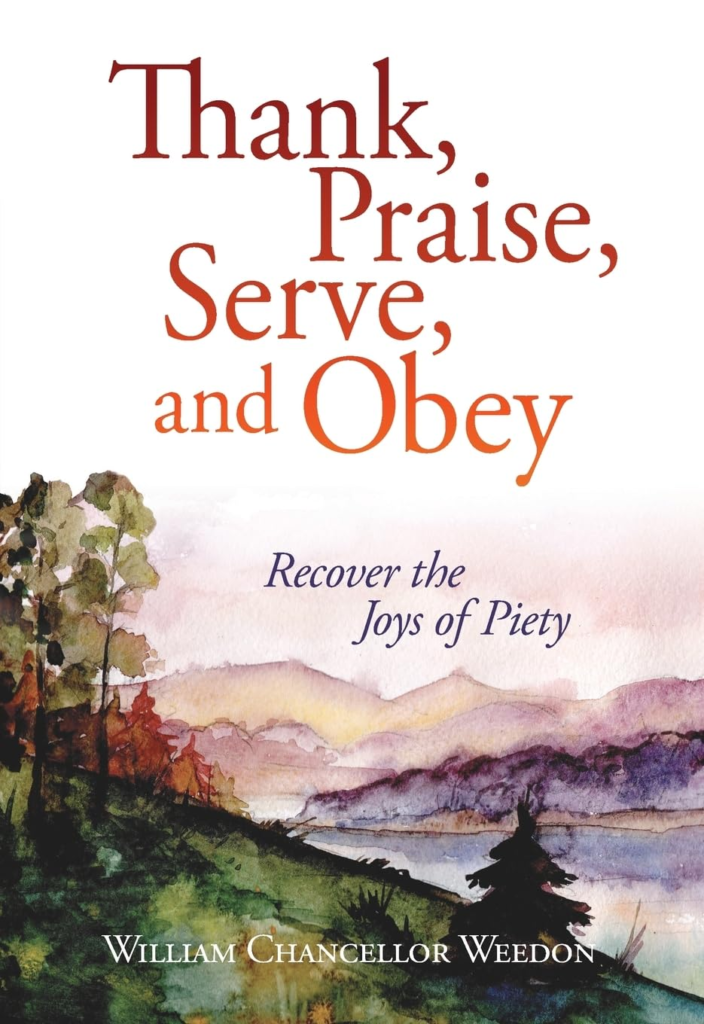
An edifying overview of practices of Christian living such as Bible reading, going to confession, and witnessing to others about Jesus.
[1] Of course flourishing and the good life are more than merely ethics.
[2] “For when Gentiles, who do not have the law, by nature do what the law requires, they are a law to themselves, even though they do not have the law. 15 They show that the work of the law is written on their hearts, while their conscience also bears witness, and their conflicting thoughts accuse or even excuse them” (Romans 2:14-15).
[3] See Romans 1:18-32.
[4] A different post will defend such thought experiments.
© 2026, Scott Stiegemeyer. All rights reserved.
